





EXTREME 5089
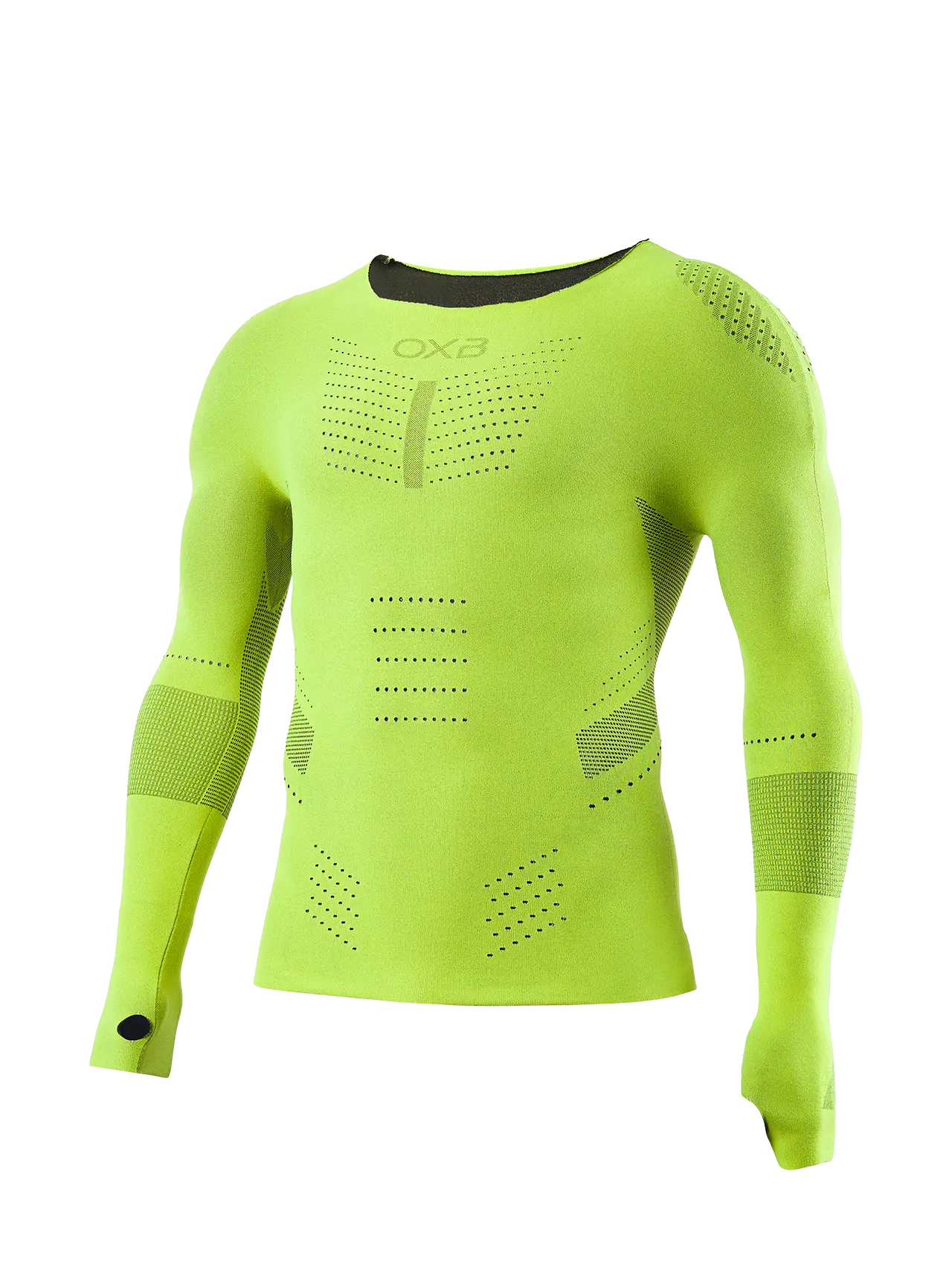
Ultralight Men's Long-Sleeve Trail Running Shirt with Raw-Edge Hem
€60,00
If you’ve ever wondered how runners train in the snow, you’ve come to the right blog!
It’s hard to believe, but there are plenty of opportunities for an effective workout, even in the mountains. Don’t believe it? Let’s find out together how they do it!
First of all, you can take advantage of the elevation gain to sprint uphill . Sprinting, being a sudden and quick burst of speed, allows you to develop specific strength, with positive effects on your pace on the flat, your chances of avoiding injury, and your technical ability.
The hill is also ideal for long repetitions . Repeats are running tests of variable length and at a fixed speed alternating with variable recovery.
Many, however, seek a hilly route , one with alternating climbs and descents, preferably of varying length and elevation. This is excellent for building endurance and strength.
When it snows heavily, experts recommend circuit training . A simple, snow-covered route is selected that’s optimal for varying speeds. Remember: it’s best to run where there’s more snow!
What’s the one essential item you can’t do without if you want to tackle the mountains like a true runner? As always, it’s your gear.
First, let’s talk about shoes: they shouldn’t be too light because there’s little traction on snow, and it’s best to wear specialized shoes.
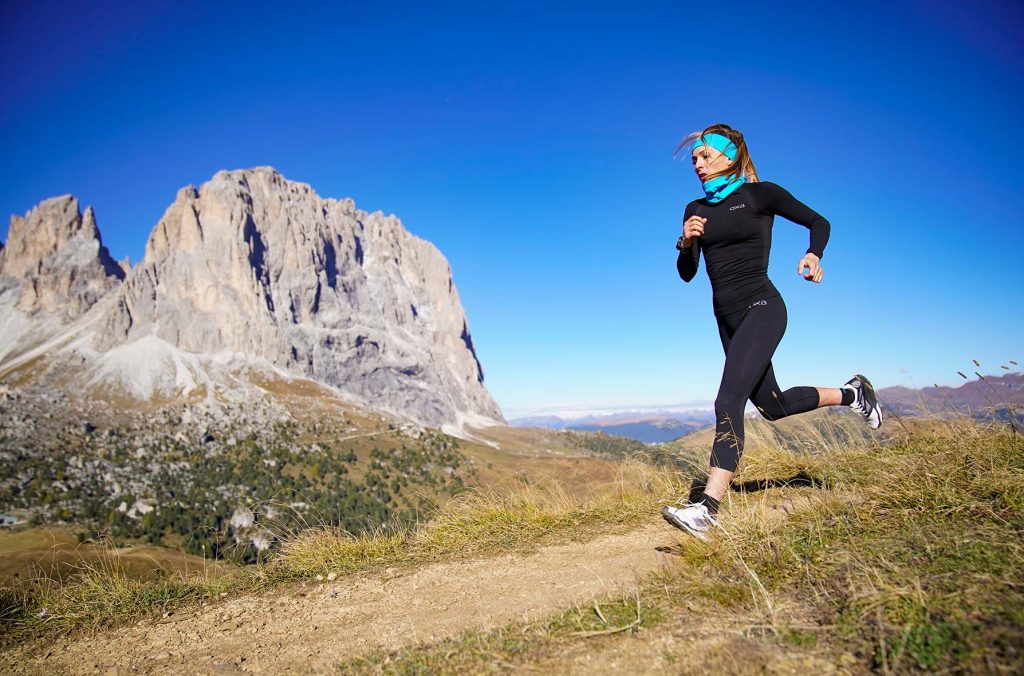
Oxyburn’s long technical socks are excellent. In snowy conditions, the sock should cover the ankle while maintaining a perfect microclimate, thereby facilitating movement. Oxyburn’s technical thermal tops and pants protect your body from the cold without being bulky, leaving you free to train without hindering your goals.
Choose the freedom to work out whenever and wherever you want—choose Oxyburn!
Share: