




EXTREME 5089
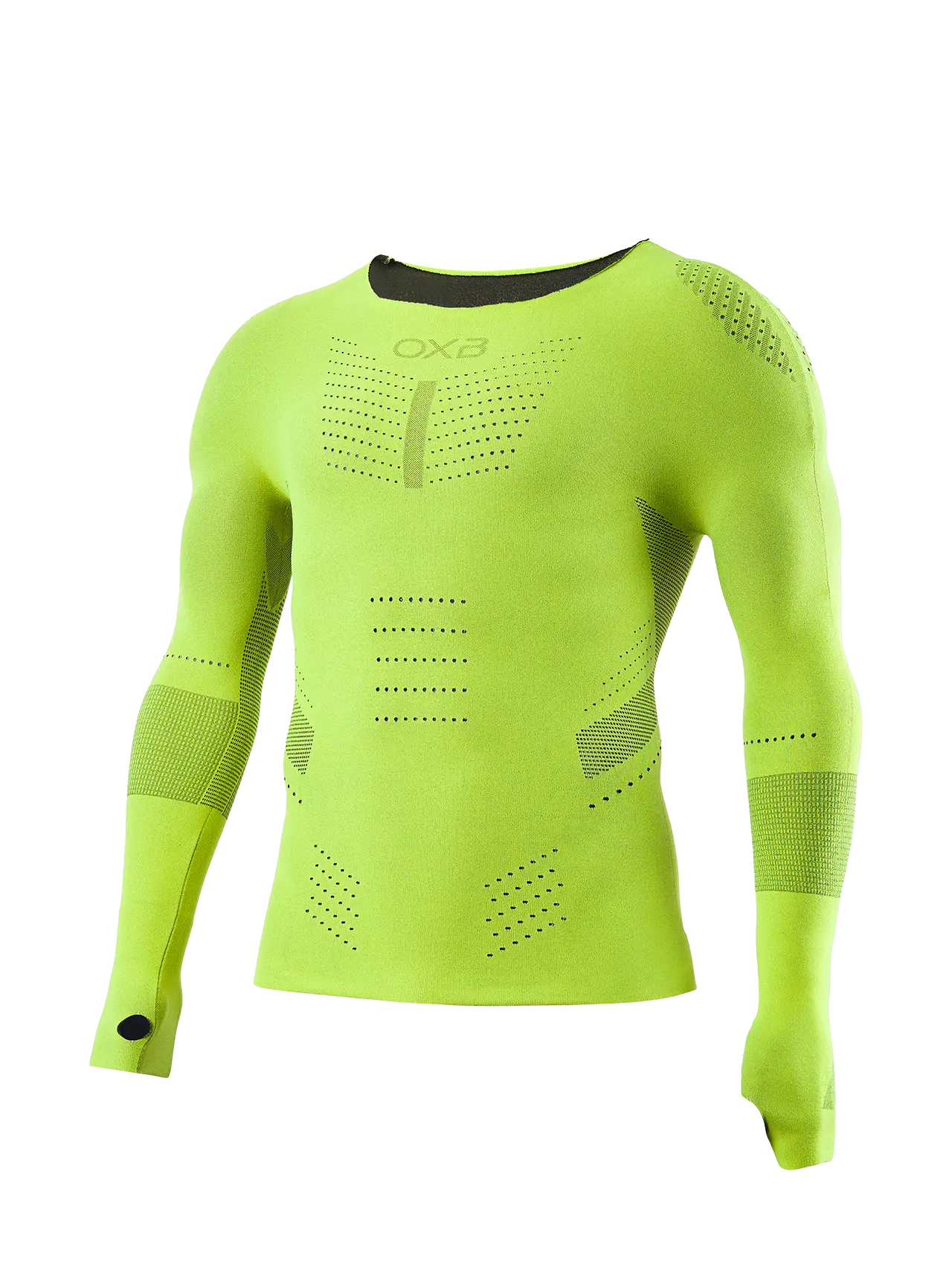
Ultralight Men's Long-Sleeve Trail Running Shirt with Raw-Edge Hem
€60,00
Oxyburn is here to support you even more! We’ll help you train for a long-distance race this fall 2018. Whether it’s a marathon or a half-marathon, with us you’ll be ready to run both.
With the guidance and advice of a professional trainer and athlete, you can follow a training plan to prepare for a 42 km race, starting today and running through November! Thanks torunning compression gear, socks, sleeves, and active graduated compression running accessories, you’ll be able to train at your best while preventing injuries and chafing issues like blisters or redness—and, most importantly, extend your distances, increase your intensity, and reduce recovery times.
During the fall months, many athletes take on marathons—not just runners, but also triathletes and mountaineers.
Ilaria Benetti, who holds a Ph.D. in Kinesiology and is a strength and conditioning coach and FIDAL-certified instructor, will guide us through our training by writing six months’ worth of marathon training plans for Oxyburn. Let’s start with the first month!

Ilaria Benetti, Ph.D. in Kinesiology and FIDAL Instructor
Here is the schedule for four days of training per week, from Wednesday, May 2, through Sunday, May 27.
The plan allows you to work on three areas: endurance, capacity, and aerobic power.
WED: 30-minute easy run + 10 sets of 80-meter progressive sprints + stretching
FRI: 20’ easy run + 30″ fast + 1′ slow x 4 times
+ 1′ fast + 2′ slow
+ 2′ fast + 2′ slow
+ 3′ fast + 3′ slow
+ 2′ fast + 2′ slow
+ 1′ fast + 2′ slow
SAT/SUN: 2 km warm-up + 10 km at a moderate pace (I recommend participating in a few non-competitive races).
MON: 20’ easy run + (3′ moderate, 1′ fast, 4′ slow) x 4 times
WED: 20’ run + 4×100 mt. strides + 2×500 + 1×1000 + 3×400 + 1×1200 + 1×800 + 1×400 recovery: 2′ between sets of the same distance / 4′ between sets of different distances.
FRI: 15′ easy run + (1′ fast + 1′ slow) x 5 times + 10′ easy run + (1′ fast + 2′ slow) x 4 times.
Sat/Sun: 15 km slow long run (non-competitive)
MON: 15’ easy run + (1 km at a moderate pace + 1 km at an easy pace) x 4 times
WED: 20’ easy run + 4×100 mt. strides + 2×500 + 1×1000 + 5×300 + 1×1500 + 1×800 + 1×400 Recovery: 2′ between sets of the same distance / 4′ between sets of different distances.
FRI: 15’ easy run + (30″ fast run + 1′ slow run) x 6 times + 10’ easy run + (30″ fast run + 1′ slow run) x 6 times
SAT/SUN: 17 km slow run (non-competitive)
WEEK 4 (recovery week)
MON: 50-minute run + 10 sets of 100-meter progressive sprints (walk back) + stretching
WED: 20-minute run + 4 x 100-meter sprints + 10 x 300-meter runs with 100-meter walking recovery between each.
FRI: 50’ easy run + 10 x 100 mt. strides + stretching
SUN: 10/12 km easy run
Running pace:
slow: 40–50 seconds slower than your average pace in a 10-km race
moderate: 15–25 seconds slower than your average pace in a 10-km race
fast: 20 seconds faster than your average pace in a 10-km race
Oxyburn temperature-regulating apparel is designed to retain heat and wick sweat away. The energizing graduated compression improves blood circulation, helping the body regulate its temperature and keeping muscles in optimal condition, thereby delaying the onset of fatigue.
Here’s a perfect outfit for your training:
Share: