


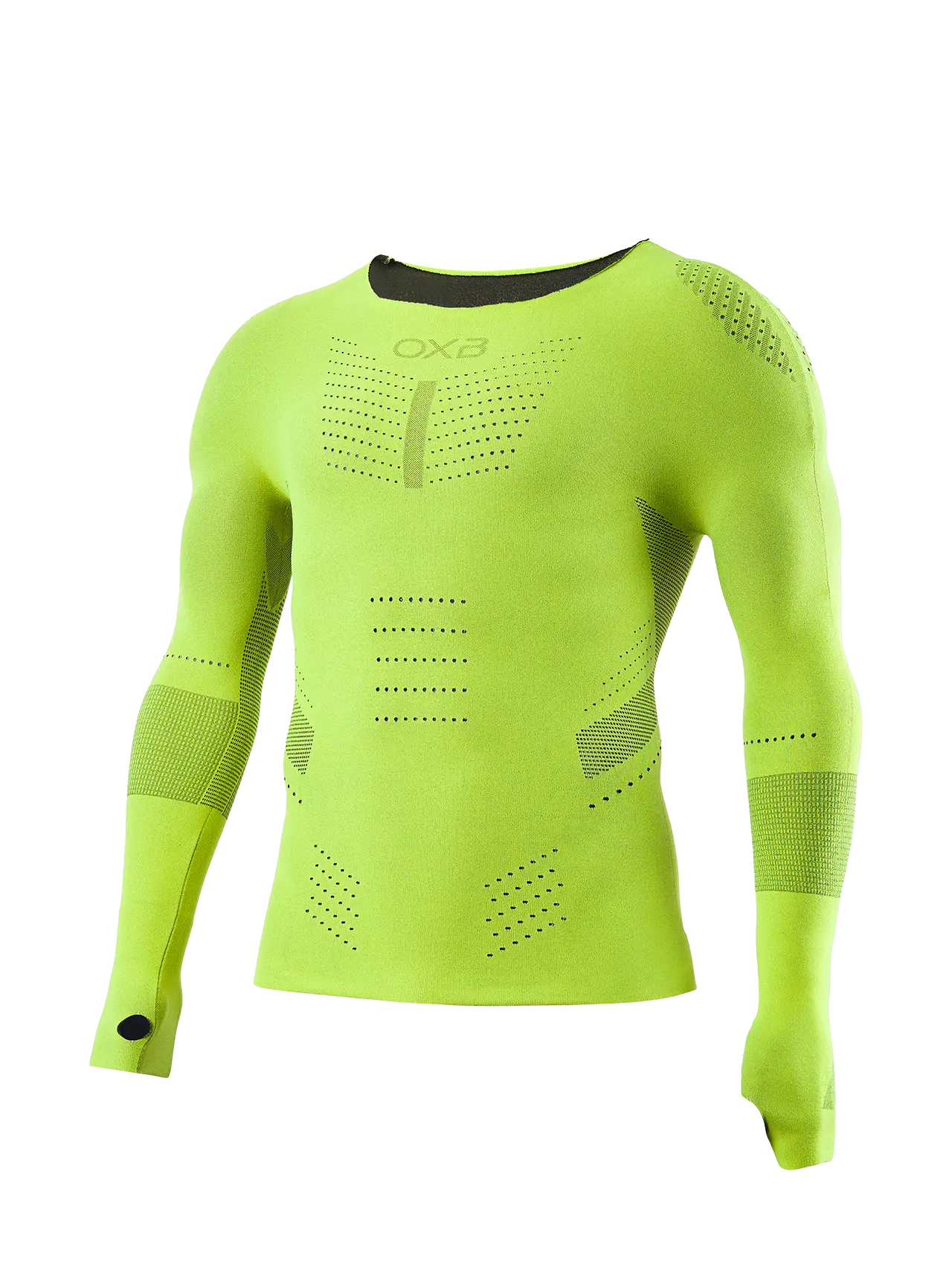
EXTREME 5089
Ultralight Men's Long-Sleeve Trail Running Shirt with Raw-Edge Hem
€60,00
Built to last, running shoes have a mileage limit that must be strictly adhered to if you want to avoid unpleasant injuries.
No, running shoes—just like car tires, brake pads… and anything else destined to inevitably face planned obsolescence—aren’t eternal; they have a sort of expiration date. Sooner or later, we’ve all found ourselves running in our “favorite shoes,” unable to replace them despite nagging sciatic pain, attributing our declining performance to a period of stress or fatigue, work, other commitments, the weather… but very often, in fact, these are just excuses.
In fact, based on expert advice, it can be argued that the relationship between a shoe’s lifespan and its type is currently as follows:
A1: 150 to 300 kilometers;
A2: 250 to 500 kilometers;
A3/A4: 500 to 1,000 kilometers.
The 1,000 kilometers, therefore, represent the critical distance—that is, the maximum mileage that can be covered while wearing a particular pair of running shoes. No, it doesn’t matter at all if the shoe still “looks” good, isn’t damaged, or doesn’t have a particularly worn-out sole… In fact, as the kilometers add up, a running shoe loses its elasticity, risking becoming the cause of leg inflammation or sciatica…
All of this has, of course, been “scientifically and thoroughly” tested by me personally on my sciatica, ankles, calves, knees, hips, back, neck, and shoulders…
Upper, outsole, midsole. If any one of these three components wears out before reaching the so-called “critical distance,” then that particular type of shoe is not suitable for the runner, who will consequently need to reconsider their choices.
Climate. The materials used to make shoes may be very durable, but they don’t perform very well in terms of temperature. Polyurethane is sensitive to low temperatures, while gel is sensitive to high temperatures; for this reason, older models on sale may be riskier than models that have just hit the market.
Washing and drying. Shoes should be hand-washed in cold water and allowed to dry at room temperature, preferably in a well-ventilated area. Machine washing (even at 30 °C) is not recommended, especially if followed by drying near heat sources that are not adequately shielded.
Excess weight. An athlete’s excess weight shortens the life of the shoe by at least 20%.
Consequently, it’s easy to see that the average lifespan of a good running shoe is about 800 kilometers, while for racing shoes, the recommendation is to replace them about every 400 kilometers. Running in a high-quality shoe that has lost most of its elasticity is, in fact, extremely harmful!
Share: